Do Any Weight Loss Supplements Work? Revisiting the Forskolin Studies
Quick Answer: What Did the Forskolin Studies Really Show?
One small 2005 trial in overweight men reported a drop in body fat percentage and fat mass with no significant change on the scale, and a companion trial in overweight women published the same year found no significant change in body composition at all. Both used 250 mg of a Coleus forskohlii extract standardised to 10 percent forskolin, twice daily, for twelve weeks — about 50 mg of forskolin a day. Twenty years later there is still no large, long, independent trial confirming the men's result, which is why forskolin is best described as an interesting unfinished question rather than a proven ingredient.
- The famous finding: body composition shifted in men; scale weight did not.
- The forgotten finding: the parallel trial in women showed no significant fat loss.
- The gap: two studies of a few dozen people each, never convincingly replicated at scale.
What forskolin is, and why it was a plausible idea
Forskolin is a diterpene isolated from the root of Coleus forskohlii, a member of the mint family long used in Ayurvedic practice. In pharmacology it is a genuinely famous molecule, though not for weight: it is a standard laboratory tool for activating adenylate cyclase, the enzyme that produces cyclic AMP inside cells. Researchers reach for it precisely because it works so reliably in a dish.
The weight-loss hypothesis follows from that. Cyclic AMP is one of the signals that switches on hormone-sensitive lipase, the enzyme that breaks stored triglyceride down into free fatty acids. Raise cyclic AMP, the reasoning goes, and you nudge fat cells toward releasing their contents. It is a tidy story with real biochemistry underneath it, which is exactly why it deserved a proper test — and why it is such a good example of how far a mechanism can travel on its own.
Two things get lost in the retelling. First, releasing fatty acids from a fat cell is not the same as burning them; if they are not oxidised they are simply re-esterified and stored again. Second, a molecule that reliably activates an enzyme in a dish may barely reach the tissue at all after being swallowed. Oral forskolin has poor bioavailability, which is a substantial obstacle for the whole premise.
The 2005 trial everyone still quotes
The 2005 study behind almost every forskolin product on the market enrolled thirty overweight and obese men. They took 250 mg of a 10 percent forskolin extract twice a day, or a placebo, for twelve weeks, with body composition assessed by DXA. The published result was a decrease in body fat percentage and fat mass in the forskolin group, an increase in lean body mass, and a rise in free testosterone. Body weight itself did not change significantly.
Read carefully, that is a more interesting finding than the marketing version. A change in composition without a change in weight is plausible and worth investigating. It is also, in a trial of thirty men over twelve weeks, exactly the kind of result that needs replication before anyone builds a category on it. Small studies produce impressive-looking numbers routinely; the ones that survive scrutiny are the ones that get repeated.
Looking for something less dramatic and better documented?
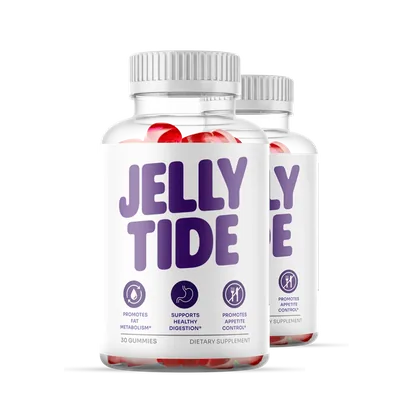
If you have been searching for the best weight loss supplement and finding nothing but bold promises, a plain, short-panel formula is a more honest starting point. JellyTide is apple cider vinegar with BHB calcium, magnesium and sodium salts — a modest support to a calorie-aware diet, described as such.
See JellyTide on the Official StoreThe study in women that ran at the same time
Published the same year, a second trial gave the same extract at the same dose to twenty-three overweight women for twelve weeks. It found no significant change in body composition compared with placebo — the same shrug broad reviews of food supplements for weight loss keep arriving at. The authors suggested the results hinted at a slowing of weight gain rather than a reduction, which is a careful way of describing a null finding with a possible trend inside it.
You will rarely see that second study on a product page, and its absence is the most revealing thing about how this ingredient is sold. Two trials, run at the same time, using the same material at the same dose, produced different answers in men and women. The correct scientific response is to say the evidence is unresolved and to run a bigger trial. The commercial response was to quote the first one for twenty years.
When a category rests on one small study, the useful question is not what that study found. It is why, in the two decades since, nobody has managed to find it again.
So, do any weight loss supplements work?
Do any weight loss supplements work? Some do something, most do very little, and a network meta-analysis of 111 randomized trials of nutraceuticals puts almost every ingredient in this aisle within a couple of kilograms of placebo. The honest answer depends on what you are willing to count as working. If working means producing a measurable, repeatable effect that supports a calorie-aware diet, then a handful qualify: fibre supplements that increase fullness, protein that does the same, and caffeine, which has a small and short-lived effect on energy expenditure. If working means producing meaningful fat loss on its own, without changing what you eat, then nothing sold over the counter has cleared that bar.
People asking whether there are any weight loss supplements that actually work are usually asking a fair question that the aisle refuses to answer plainly. The clearest cautionary case is garcinia cambogia, tested often and found wanting. So here is the plain version: the size of the effect matters more than its existence, and the size of every honest supplement effect is small. That is not a reason to dismiss the category. It is a reason to buy on the basis of a stated ingredient and a stated amount, and to expect a nudge rather than a transformation.
Evidence strength across common weight-management ingredients
| Ingredient | Proposed mechanism | Human evidence | Realistic expectation |
|---|---|---|---|
| Forskolin (Coleus forskohlii) | Raises cyclic AMP, may trigger lipolysis | Two small 12-week trials, conflicting | Unproven; composition change unreplicated |
| Soluble fibre | Slows gastric emptying, increases fullness | Reasonably consistent, modest | Small support for appetite control |
| Caffeine | Small rise in energy expenditure | Consistent but short-lived; tolerance develops | Marginal, and easy to overdo |
| Apple cider vinegar | Blunts the post-meal glucose rise | Repeated small trials, modest weight data | Small support alongside diet |
| Green tea catechins | Thermogenesis, fat oxidation | Mixed; effects small where present | Marginal |
| "Proprietary fat-burning blend" | Unstated | None specific to the product | Unevaluable by design |

What twenty years of follow-up did and did not produce
Since 2005, forskolin has been tested a few more times, in small samples and short windows, with results that have not settled the question. A more recent 12-week placebo-controlled trial of a Coleus forskohlii extract again reported only modest changes, and other work has looked at appetite and metabolic markers rather than fat mass. Analysts who have gathered the literature reach the same conclusion each time: too few participants, too much variation in preparations, not enough replication to support a recommendation. The United States National Institutes of Health, in its consumer and professional material on supplements marketed for weight loss, places forskolin among the ingredients with limited evidence and calls for better data.
There is a second, quieter problem, and it is the one that also dogs green coffee bean extract: product quality. Coleus forskohlii products vary in how much forskolin they actually contain, and standardisation claims are not independently verified before sale. In a category where the studied dose depends entirely on a percentage printed on a label, an unverified percentage is not a small detail. It is the difference between taking the studied dose and taking a decorative fraction of it.
Safety, and what forskolin cannot do
The limits deserve to be stated as plainly as the promise. Forskolin has not been shown to reduce body weight in humans. It has not been shown to work in women in the one trial that looked. It is not a treatment for obesity or for any medical condition, and nothing in this article should be read as suggesting otherwise. And no supplement in this category removes the need for a calorie deficit; the arithmetic of energy balance is not negotiable by capsule.
On safety, the short trials reported it as generally tolerated. Beyond them, the picture thins out fast. Forskolin can lower blood pressure and may affect blood clotting, which makes it a poor companion for antihypertensives, anticoagulants and some heart medicines. It has been associated with increased stomach acid, so people with reflux or ulcers should be cautious. It is not appropriate in pregnancy or while nursing. Anyone shopping for where to buy fat burner supplements should treat those interactions as the first question rather than the last.

A more modest ingredient with a steadier record
The contrast worth drawing is not between forskolin and a better fat burner. It is between an ingredient sold on a dramatic mechanism and one sold on a modest, reproducible measurement. Vinegar's effect on the post-meal glucose and insulin rise has been shown repeatedly in small human trials, and the weight data, where they exist, describe changes of a kilogram or two over about twelve weeks alongside an ordinary diet. That is unexciting, and it is the kind of claim that survives being checked — as we set out in detail in our look at the apple cider vinegar weight-loss evidence.
JellyTide is built on that ingredient rather than on a lipolysis story: apple cider vinegar with BHB calcium, magnesium and sodium salts, in a gummy people are more likely to keep taking than a bottle of vinegar they will abandon by week two. Adherence is unglamorous, and it is the single largest factor in whether any daily supplement does anything at all. If the question "do any weight loss supplements work" is really a question about what to expect, the answer on offer here is a nudge alongside a sensible diet, not a transformation.
Medical note: this article is general information, not medical advice. Forskolin may affect blood pressure and clotting and can interact with prescription medicines. Speak to a healthcare professional before starting any supplement, especially if you are pregnant, nursing, or taking medication.
Frequently asked questions
Did the forskolin studies show weight loss?
Not weight loss in the way the word is normally used. The most quoted trial, in overweight men, reported a fall in body fat percentage and fat mass alongside an increase in lean mass, while scale weight did not change significantly. A companion trial in overweight women found no significant change in body composition at all.
What dose of forskolin was used in the research?
Both 2005 trials used 250 mg of a Coleus forskohlii extract standardised to 10 percent forskolin, taken twice a day for 12 weeks. That works out to about 50 mg of forskolin daily. Products that do not state the standardisation percentage cannot be compared with that dose.
Do any weight loss supplements work at all?
A small number produce modest, repeatable effects that support a calorie-aware diet rather than replace it, such as fibre and protein for fullness. Most heavily marketed fat burners rest on small or single studies. No supplement has been shown to produce the kind of change that diet, activity, sleep and prescribed medicines can.
Is forskolin safe to take?
The short trials reported it as generally tolerated, but they were small and lasted only weeks, so the long term picture is unknown. Forskolin can lower blood pressure and may affect blood thinning, so anyone taking blood pressure medicine, anticoagulants or heart medicines should speak to a doctor or pharmacist first, and it is not recommended in pregnancy.
Scientific references
- Godard MP, Johnson BA, Richmond SR — Body composition and hormonal adaptations associated with forskolin consumption in overweight and obese men, Obes Res (2005)
- Channangihalli Thimmegowda S, Hussain Mirza FH, Venkataraman R, et al. — A 12-week, double-blind, placebo-controlled study of Coleus forskohlii on body weight loss, J Int Soc Sports Nutr (2026)
- Shahinfar H, Jayedi A, Torabynasab K, et al. — Comparative effects of nutraceuticals on body weight in adults with overweight or obesity: network meta-analysis of 111 randomized clinical trials, Pharmacol Res (2023)
- Watanabe M, Risi R, Masi D, et al. — Current evidence to propose different food supplements for weight loss: a comprehensive review, Nutrients (2020)
- NIH Office of Dietary Supplements — Dietary Supplements for Weight Loss
A small claim, clearly stated
Apple cider vinegar with BHB calcium, magnesium and sodium salts in one daily gummy — modest support for appetite and everyday metabolism, with every ingredient on the panel.