Bitter Melon as a Blood Sugar Metabolism Supplement: Where the Research Stands
Quick Answer: Does Bitter Melon Do Anything for Glucose?
The signal is real but small, and it has not held up consistently. Human trials of bitter melon (Momordica charantia) have reported modest reductions in glucose markers at around 2,000 mg a day of dried fruit powder, while the most careful systematic assessments have concluded the evidence is too weak and too inconsistent to recommend it for glucose control. Where it has been compared directly with a standard medicine, the herb came off clearly second. Treat bitter melon as a plausible dietary ingredient under study — not as a substitute for anything a doctor has prescribed.
- Best-supported outcome: small changes in fasting glucose and average-glucose markers, inconsistently.
- Typical studied dose: about 2,000 mg a day of dried fruit powder, taken with meals.
- Biggest caution: it can stack with glucose-lowering medicines, so ask a doctor first.
What bitter melon is, and why it keeps coming up
Bitter melon is the warty green gourd sold as karela, bitter gourd or goya across South Asia, China, the Caribbean and East Africa. It is a food first and a remedy second: stir-fried, stuffed, salted, juiced. Its traditional association with blood sugar runs deep in Ayurvedic and Chinese practice, and that history is exactly why it became one of the most-tested plants in the whole glucose literature.
The modern interest started when laboratory work showed that extracts of the fruit could lower glucose in animals. That is a genuinely promising starting point, and it is also where a great many botanical stories peak. Rodent physiology is forgiving; human physiology, especially over months, is not. The story of bitter melon over the last three decades is largely the story of a strong preclinical result failing to translate cleanly into people.
The compounds people point to
Three groups of compounds get named when bitter melon is discussed. Charantin is a mixture of steroidal saponins isolated from the fruit and the one most often printed on labels. Polypeptide-p, sometimes marketed as "plant insulin", is a protein fraction identified in the seeds and fruit that showed glucose-lowering activity when injected in early experiments — a route that has little to do with swallowing a capsule. The third group is the cucurbitane-type triterpenoids, which in cell studies appear to nudge glucose uptake pathways, including AMPK signalling.
Each of those is a reasonable mechanistic hypothesis. None of them has been shown to be the reason a person's glucose changes after taking a supplement, and mechanisms are the cheapest thing in this field. A plausible pathway on a slide is not a clinical effect, and the distance between the two is where most supplement marketing lives.
Want a shorter ingredient list you can verify?
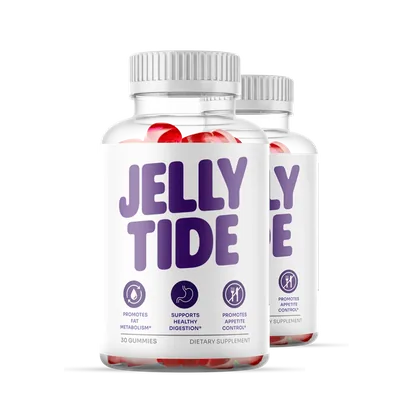
If you are wading through options for the best blood sugar supplement and finding twelve-herb blends with hidden amounts, a simple, short-panel formula is a reasonable place to start. JellyTide keeps to apple cider vinegar with BHB calcium, magnesium and sodium salts, all named on the panel.
See JellyTide on the Official StoreWhat the human trials actually found
Individual trials have gone both ways. Several small randomised studies in adults with elevated glucose have reported reductions in fasting glucose or in fructosamine, a marker of average glucose over the preceding couple of weeks, and a meta-analysis of those trials found a small pooled reduction. Others found nothing distinguishable from placebo. The trials are typically four to twelve weeks long, enrol a few dozen people, and use different preparations — dried fruit powder, aqueous extract, juice — which makes pooling them a genuinely difficult exercise.
When analysts have pooled what exists, the conclusion has been consistent and unglamorous: insufficient evidence. A Cochrane systematic assessment of bitter melon for type 2 diabetes found the available trials too few, too small and too methodologically limited to support a recommendation, and called for better-designed studies. The United States National Center for Complementary and Integrative Health describes the human research as limited and the results as mixed. Those are not dismissals of the plant; they are accurate descriptions of a thin literature.
How the evidence stacks up by outcome
| Claim | Evidence strength | What the research shows |
|---|---|---|
| Lowers fasting glucose | Weak, inconsistent | Some small trials positive, others null; pooled analyses unconvinced |
| Lowers average-glucose markers | Weak | Modest change at the higher studied dose in at least one controlled trial |
| Matches a standard glucose-lowering drug | Contradicted | Direct comparison found the medicine clearly more effective |
| Reduces body weight or body fat | Very weak | Little human data; not what the trials were designed to measure |
| Improves insulin sensitivity | Preliminary | Mechanistic and animal support; human confirmation limited |
The head-to-head comparison nobody quotes
The most instructive study in this area is the one that put bitter melon next to a standard medicine rather than next to a placebo. In a four-week randomised trial comparing bitter melon with metformin, adults newly diagnosed with type 2 diabetes took bitter melon powder at several doses or the medicine. The highest herbal dose — about 2,000 mg a day — produced a small reduction in a marker of average glucose. Metformin produced a larger one. The lower bitter melon doses did not do much at all.
That single comparison tells you more than a dozen enthusiastic summaries, and the same order-of-magnitude gap turns up in the human evidence on cinnamon and blood sugar. A plant ingredient can have a measurable effect and still be an order of magnitude away from a medicine, and a supplement label is not entitled to borrow the drug's reputation because the two were once in the same study.
The most useful question about any botanical is not "does it do anything?" but "how much, compared with what, and for how long?" Bitter melon answers the first question with a cautious yes and the other three uncomfortably.

Choosing a blood sugar metabolism supplement: what to check
If you are shopping for a blood sugar metabolism supplement, four checks separate a defensible product from a decorative one. First, is the amount per serving stated for each ingredient, or is everything hidden inside a proprietary blend? Second, does the amount resemble what was studied, or is it a fraction of it, present for label appeal? Third, is the plant part and extract type declared — fruit versus seed, dried powder versus concentrated extract — because those are different materials with different research behind them. Fourth, does the marketing make a disease claim? Anything promising to treat, prevent or reverse a condition has told you what kind of company you are dealing with.
Searches for the best herbal supplement for blood sugar return an enormous number of near-identical products, and the differences that matter are almost never on the front of the jar. The one ingredient in this aisle with a genuinely substantial trial record is berberine, whose randomized data on fasting glucose and HbA1c sets the bar the rest are measured against. A serious blood sugar metabolism supplement should be boring to read: named ingredients, stated amounts, no miracle language, and a clear statement that it does not replace medical care.
Dose, forms and how it is usually taken
In studies, dried fruit powder at roughly 2,000 mg a day, split across meals, is the reference point. Juice made from fresh fruit has been used in some trials, in the region of a small glass daily, which is a very different material with a very different practical burden. Capsules of concentrated extract are the most common retail form, and this is where comparisons collapse: a 500 mg capsule of a 10:1 extract is not one-quarter of the studied dose, nor is it necessarily equivalent to anything at all, unless the label declares the extract ratio and the marker compound.
Timing tends to follow meals, on the logic that the target is the post-meal glucose rise. That is sensible but not strongly evidenced in humans, and it is worth being honest that the practical protocols in this category are mostly inherited convention rather than tested design. The same problem shows up with banaba leaf and corosolic acid, where the studied doses and the retail doses have drifted apart in exactly the same way.

What bitter melon cannot do, and the safety notes
Three limits, stated plainly. It is not a treatment for any disease, and nothing here should be read as suggesting a supplement can replace prescribed medicine or medical monitoring. It has no meaningful human evidence behind weight loss, despite turning up in fat-burner blends. And the size of the effect in the best-conducted work is small enough that ordinary variation in diet, sleep and activity would swamp it in real life.
The safety notes matter more here than for most botanicals, because the mechanism is the risk. If bitter melon does lower glucose, it can do so on top of medicines that already lower glucose — insulin, sulfonylureas and others — which is a route to hypoglycaemia. Bitter melon is traditionally avoided in pregnancy and there is animal evidence to justify that caution. The seeds contain vicine, which can trigger a haemolytic reaction in people with G6PD deficiency. Digestive upset, including cramping and loose stools, is the most common everyday complaint. None of this is exotic, and all of it is a reason to talk to a pharmacist before adding it to a medicine cabinet.
Where this leaves an everyday gummy
People often arrive at bitter melon and at apple cider vinegar for the same reason: a wish to blunt what happens after a carbohydrate-heavy meal. It is worth knowing that those two ingredients do not sit at the same evidence level. Vinegar's effect on the post-meal glucose and insulin rise has been reproduced in several small human trials and is the more consistent of the two findings, even though it, too, is a modest effect that works alongside diet rather than instead of it.
JellyTide is an apple cider vinegar gummy with BHB calcium, magnesium and sodium salts, and it is built on that better-tested ingredient rather than on a long list of botanicals with thin files. Readers comparing apple cider vinegar gummies price and format options are usually really asking which ingredient has the least hand-waving behind it — and on that measure, vinegar is the more defensible starting point of the two discussed here.
Medical note: this article is general information, not medical advice. Bitter melon may add to the effect of glucose-lowering medicines and is not recommended in pregnancy. Speak to a healthcare professional before starting any supplement, especially if you are pregnant, nursing, or taking medication.
Frequently asked questions
Does bitter melon lower blood sugar in humans?
Small human trials have reported modest reductions in glucose markers, but the results are inconsistent and the largest systematic assessments have concluded the evidence is not strong enough to recommend bitter melon for glucose control. The honest summary is a weak signal from small studies, not a settled finding.
How much bitter melon did the studies use?
The most commonly studied amount is around 2,000 mg a day of dried fruit powder, taken in divided doses with food, over four to twelve weeks. Juice and fresh fruit preparations have also been tested, and because the extracts are not standardised in the same way, doses on different labels are not directly comparable.
Is bitter melon safe to take with diabetes medication?
This is the one combination to clear with a doctor first. Bitter melon may add to the glucose lowering effect of medicines such as insulin or sulfonylureas, which raises the risk of blood sugar falling too low. Bitter melon is also not recommended in pregnancy, and the seeds can cause problems for people with G6PD deficiency.
Does bitter melon help with weight loss?
There is very little human evidence that bitter melon changes body weight or body fat, and what exists is preliminary. It is studied mainly for glucose markers, not for fat loss, so treating it as a weight loss ingredient goes beyond what the research supports.
Scientific references
- Ooi CP, Yassin Z, Hamid TA — Momordica charantia for type 2 diabetes mellitus, Cochrane Database of Systematic Reviews (2012)
- Peter EL, Kasali FM, Deyno S, Mtewa A — Momordica charantia L. lowers elevated glycaemia in type 2 diabetes patients: systematic review and meta-analysis, J Ethnopharmacol (2019)
- Fuangchan A, Sonthisombat P, Seubnukarn T, et al. — Hypoglycemic effect of bitter melon compared with metformin in newly diagnosed type 2 diabetes patients, J Ethnopharmacol (2011)
- Dans AM, Villarruz MV, Jimeno CA, et al. — The effect of Momordica charantia capsule preparation on glycemic control in type 2 diabetes needs further studies, J Clin Epidemiol (2007)
- NIH NCCIH — Bitter Melon: what the science says
A simpler formula, plainly listed
Apple cider vinegar with BHB calcium, magnesium and sodium salts in one daily gummy — every ingredient named on the panel, with the blend total stated.