Gut Health Herbal Supplements: What DGL Means on a Licorice Label
Quick Answer: What Does DGL Mean on a Licorice Label?
DGL stands for deglycyrrhizinated licorice — licorice root with most of its glycyrrhizin removed. Glycyrrhizin is the compound that makes licorice taste sweet, and it is also the compound behind licorice's reputation for raising blood pressure and depleting potassium, so taking it out is what makes the herb sensible to use every day. On a label, DGL tells you which version of the plant is in the jar; it does not tell you the dose is meaningful, and DGL belongs to the digestive-comfort family, not the fat-loss family.
- What it means: licorice with the glycyrrhizin stripped out, usually to under 2 percent.
- Why it matters: ordinary licorice taken daily can raise blood pressure and lower potassium.
- What it is for: everyday digestive comfort — and the human evidence is small and early.
What deglycyrrhizinated licorice actually is
Licorice root comes from Glycyrrhiza glabra, a legume that has been chewed, brewed and boiled for digestive complaints for thousands of years across Egypt, Greece, China and India. The root's signature compound is glycyrrhizin (also written glycyrrhizic or glycyrrhizinic acid), a saponin that is dramatically sweeter than table sugar and is the reason licorice tastes the way it does. It is also the reason licorice has a warning attached to it.
Deglycyrrhizinated licorice is what you get when a manufacturer runs licorice extract through a process that pulls the glycyrrhizin back out. What remains is the rest of the root: a mixture of flavonoids such as liquiritin and glabridin, polysaccharides and other plant compounds that were never the problem in the first place. The convention in the supplement trade is that a DGL extract has had glycyrrhizin reduced to under 2 percent, and many go far lower than that, into trace territory.
That is the whole idea in one line. DGL is not a different plant, a stronger plant or a patented invention. It is licorice with one specific compound taken away so that the rest of it can be used without the accompanying baggage.
Why the glycyrrhizin gets removed
Glycyrrhizin interferes with an enzyme in the kidney called 11-beta-hydroxysteroid dehydrogenase type 2, which normally keeps cortisol from acting on the mineralocorticoid receptor. Block that enzyme often enough and cortisol starts behaving a little like aldosterone: the body holds on to sodium and water and loses potassium. The clinical picture that follows — raised blood pressure, low potassium, sometimes swelling — is well described in the liquorice toxicity literature and is not theoretical. Published case reports describing people who ate large amounts of real licorice confectionery, or drank licorice tea daily for months, appear regularly enough that poison-control and consumer-health bodies list it.
How much is too much depends on the person, and reviews of the clinical risk factors show sensitivity varies a great deal. European food-safety advice has pointed to something in the region of 100 mg of glycyrrhizin a day as an upper limit for regular intake, with the explicit caveat that some people react below that. The United States Food and Drug Administration has long treated licorice as a permitted flavouring rather than a free-for-all, and consumer advisories around it tend to focus on people who already have high blood pressure, heart problems or kidney concerns.
Removing glycyrrhizin sidesteps that mechanism entirely. It is a sensible, unglamorous piece of formulation, and it is one of the few places in the supplement aisle where a processing step genuinely changes the safety profile of an ingredient rather than just its marketing.
DGL is one of the rare label terms that carries real information. It does not tell you the product works — but it does tell you the maker removed the part of licorice that gets people into trouble, which is more than most herbal front labels manage.
Prefer an ingredient list you can actually check?
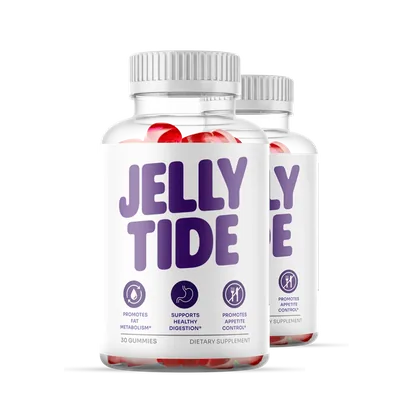
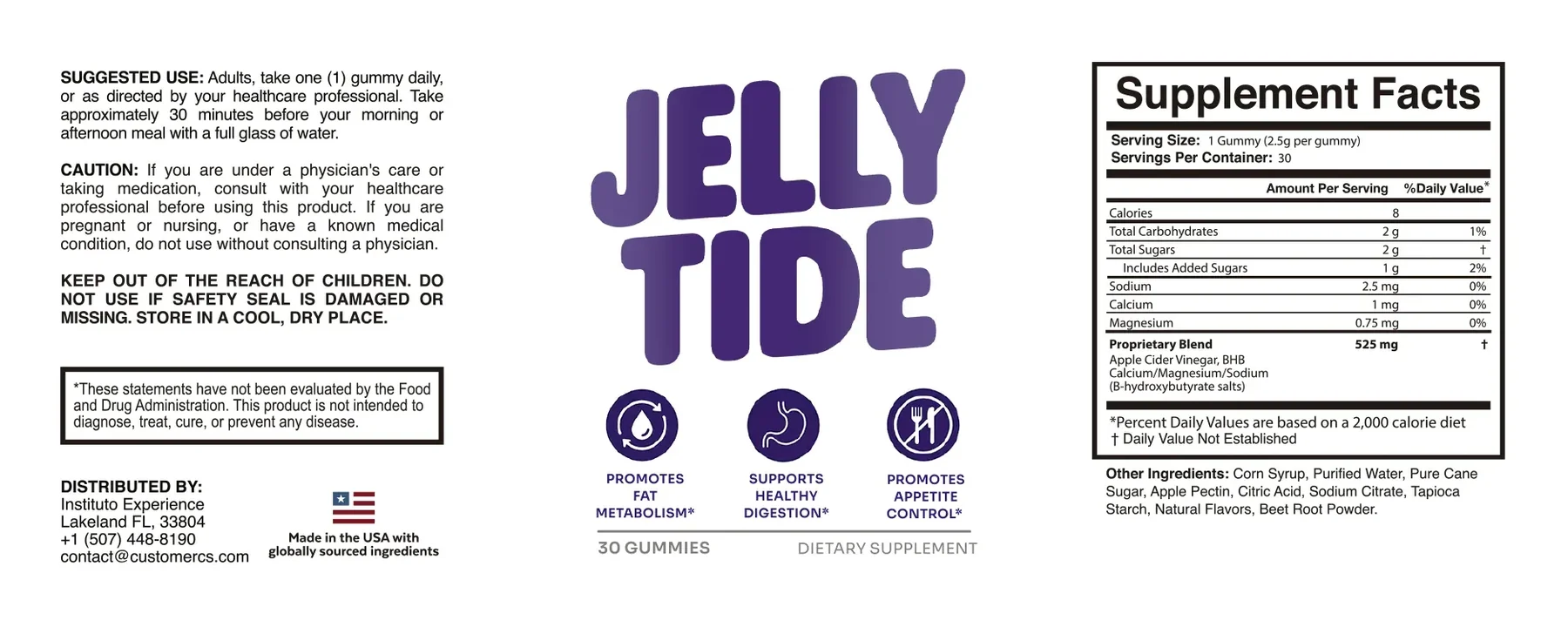
JellyTide keeps its formula short and puts every ingredient on the panel — apple cider vinegar with BHB calcium, magnesium and sodium salts in one 525 mg blend. If you have been comparing apple cider vinegar gummies price options and want to see the label before you decide, start there.
See JellyTide on the Official StoreHow to read gut health herbal supplements on a label
The DGL question is really a specific case of a general one: what does a herbal line on a facts panel have to tell you before it means anything? Four things, in order of how often they are missing.
First, the plant part. Root, leaf, seed, fruit and bark are chemically different, and a product that only says "licorice" has not told you where in the plant the material came from. Second, the extract ratio or standardisation. "Licorice extract 150 mg" is a number without a unit of meaning; "licorice root extract standardised to flavonoids, glycyrrhizin under 2 percent" is a specification. Third, the amount per serving rather than per bottle, and per the serving size you will actually take. Fourth, whether the ingredient sits inside a proprietary blend, in which case the individual amounts are hidden by design and no honest comparison with any study is possible.
Most of the disappointment people report with gut health herbal supplements traces back to one of those four gaps rather than to the herb itself. An underdosed, unstandardised extract inside a twelve-ingredient blend was never going to reproduce a study result, whatever the plant on the front of the jar.
Licorice forms compared
| Form | Glycyrrhizin | Typical use | Main caution |
|---|---|---|---|
| Whole licorice root (tea, decoction) | Full, roughly 2 to 9 percent of the root | Traditional short courses | Blood pressure and potassium with daily use |
| Standardised licorice extract | Stated on label, often standardised up | Concentrated herbal formulas | Easy to exceed sensible daily intake |
| DGL (deglycyrrhizinated) | Reduced to under 2 percent, often trace | Daily digestive comfort | Evidence base is small; not a weight-loss agent |
| Licorice-flavoured confectionery | Varies wildly; often anise flavour with no licorice at all | Food | Real licorice sweets can carry a meaningful dose |
| "Licorice" inside a proprietary blend | Undisclosed | Multi-herb products | Amount unknowable, so uncomparable to studies |
What the evidence supports, and how strong it is
Here is the honest position: DGL has a long traditional record and a thin modern one. The traditional use is for indigestion and stomach discomfort, and the plausible mechanism is that licorice flavonoids and polysaccharides encourage mucus secretion in the stomach lining, which is a defensive rather than a pharmacological effect. That is a reasonable story, and it is not the same as proof.
On the modern side, a handful of small randomised trials have tested concentrated, flavonoid-rich licorice extracts for functional dyspepsia — the everyday cluster of fullness, upper-abdominal discomfort and early satiety that has no structural cause. One randomised, double-blind, placebo-controlled trial of a concentrated Glycyrrhiza glabra extract reported improvements in symptom scores over a few weeks. They are genuinely interesting. They are also small, short, often industry-funded, and conducted with specific branded extracts that are not interchangeable with whatever DGL sits in a generic jar.
There is a second, older thread: glycyrrhizin derivatives were studied decades ago in the context of gastric mucosal protection, and some of DGL's reputation is inherited from that work rather than earned by it. Inheritance is not evidence. When you see confident claims about DGL made in the present tense, it is usually worth asking which study is being described and in what population.
Fairly summarised: promising, under-researched, low-risk in the deglycyrrhizinated form, and nowhere near the standard of evidence you would want before calling anything settled.
DGL is not a weight-loss ingredient
This needs saying plainly, because licorice turns up in weight-management formulas and the reasoning behind it is usually a chain of assumptions rather than a finding. If appetite is the actual goal, the satiety evidence behind glucomannan is a far more direct place to look. The chain goes: digestion feels better, so bloating is less, so the waistband is looser, so the product "works" for weight. Reduced bloating can absolutely change how you look and feel in the evening. It is not fat loss, and no honest label should let those two ideas blur into each other.
There is separate, preliminary work on licorice flavonoid oil and body composition, but it is limited, and it involves a different preparation from the DGL chewables people buy for their stomachs. If a product is marketed to you on the strength of that work, ask which preparation and which dose. In practice, the answer usually reveals that the studied material and the material in the jar have little in common beyond the word licorice.

What DGL cannot do: the limits worth stating
Three limits deserve to be spelled out rather than buried. The first is diagnostic: persistent stomach pain, difficulty swallowing, unexplained weight loss, vomiting or black stools are signals to see a doctor, not to try a herb. A supplement that makes you comfortable enough to postpone a proper assessment has done you harm, not good.
The second is interaction. Even in the deglycyrrhizinated form, licorice-containing products sit in a category that people on blood-pressure medicines, diuretics, corticosteroids or heart-rhythm drugs should clear with a pharmacist. The glycyrrhizin has gone; the sensible habit of checking has not.
The third is the gap between ingredient evidence and product evidence. Even where a specific licorice extract has been trialled, the finished multi-ingredient product on the shelf almost never has been. An ingredient can have a study behind it while the thing you swallow has none, and both statements can be true at once. That distinction is the single most useful filter to carry around the supplement aisle, and it applies just as much to a metabolism formula as it does to a digestive one — the same reasoning we applied to bitter melon and the glucose research.
Where a gut-comfort herb fits next to an everyday gummy
People searching for the best gut health supplement and people searching for apple cider vinegar gummies are usually after slightly different things, and it helps to keep them apart. Gut health herbal supplements like DGL are aimed at how your stomach feels after eating; where the complaint is regularity rather than comfort, our comparison of psyllium and glucomannan covers the fibres that address it. An apple cider vinegar gummy is aimed at the metabolic side of a meal — the post-meal blood-sugar response, plus a modest appetite effect — which is a different mechanism with a different, and in the case of vinegar, somewhat better-tested, evidence base.
JellyTide sits in the second category rather than the first. It is an apple cider vinegar gummy with BHB calcium, magnesium and sodium salts, and the reason we cover licorice at all is that readers keep meeting it on adjacent labels and want to know what the letters mean. Knowing that DGL is a specific, safety-motivated processing step — and not a proprietary breakthrough — is exactly the kind of thing that makes the aisle less bewildering.
Medical note: this article is general information, not medical advice. Licorice in its ordinary form can affect blood pressure and potassium, and herbal products can interact with prescription medicines. Speak to a healthcare professional before starting any supplement, especially if you are pregnant, nursing, or taking medication.
Frequently asked questions
What does DGL stand for on a supplement label?
DGL stands for deglycyrrhizinated licorice. It is licorice root that has had most of its glycyrrhizin removed, usually down to under 2 percent and often to trace amounts. The rest of the root, including its flavonoids, stays behind, which is why DGL is the form used in products meant to be taken every day.
Is DGL safer than ordinary licorice root?
For regular daily use, yes, in the specific sense that removing glycyrrhizin removes the compound responsible for licorice's best known problem: sodium and water retention, potassium loss and raised blood pressure. That does not make DGL risk free. Anyone who is pregnant, taking blood pressure or diuretic medicine, or managing a health condition should ask a healthcare professional first.
Does DGL licorice help you lose weight?
No. DGL is a digestive comfort ingredient, not a weight loss one, and there is no good human evidence that it changes body weight or body fat. If a product leans on DGL as a fat burning claim, that claim is running ahead of the research.
How much DGL do studies typically use?
Traditional chewable DGL tablets are commonly around 380 to 400 mg taken before meals, while the concentrated flavonoid rich licorice extracts used in small trials of digestive comfort have been given at much lower daily amounts. Because the extracts differ, the number on one label cannot be compared with the number on another unless both state the same standardisation.
Scientific references
- Raveendra KR, Jayachandra, Srinivasa V, et al. — An extract of Glycyrrhiza glabra alleviates symptoms of functional dyspepsia: randomised, double-blind, placebo-controlled study, Evid Based Complement Alternat Med (2012)
- Ceccuzzi G, Rapino A, Perna B, Costanzini A, et al. — Liquorice toxicity: a comprehensive narrative review, Nutrients (2023)
- Yoshino T, Makino T — Clinical risk factors of licorice-induced pseudohyperaldosteronism: a 2026-updated narrative review, Front Pharmacol (2026)
- Patel P, Aknouk M, Dawson A, Aya A — Pseudohyperaldosteronism in glycyrrhizic acid toxicity from chronic licorice root consumption, Cureus (2021)
- NIH NCCIH — Licorice Root: usage, safety and what the science says
See what JellyTide actually contains
A short label you can check line by line: apple cider vinegar with BHB calcium, magnesium and sodium salts in one daily gummy. If you are working out where to buy apple cider vinegar gummies without wading through a twelve-herb list, this is the place to look.