Psyllium vs Glucomannan for Fullness: A Practical Comparison
Quick Answer: Psyllium vs Glucomannan — Which Wins for Fullness?
In the psyllium vs glucomannan comparison, both are soluble fibres that absorb water, expand and slow digestion to boost fullness. Glucomannan is the more viscous gram-for-gram, so it can feel more filling; psyllium is gentler, better studied for cholesterol, and easier on many guts. Both need plenty of water and can cause gas at first.
- Most filling per gram: glucomannan, thanks to its very high viscosity.
- Best all-rounder: psyllium — well tolerated, with strong cholesterol and regularity data.
- Non-negotiable: take either with a full glass of water and build the dose up slowly.

Why soluble fibre fills you up in the first place
Before pitting one fibre against another, it helps to understand why either does anything at all. Psyllium and glucomannan are both soluble, viscous fibres: drop them in water and they form a gel. Swallow that gel-forming fibre before or with a meal and three useful things happen. It physically bulks up the stomach contents, so the stretch receptors that signal fullness fire sooner. It slows the rate at which the stomach empties into the intestine, so you feel satisfied for longer. And it slows the absorption of sugars, which softens the post-meal glucose spike and the crash that can follow it.
None of that is exotic or proprietary — it is basic food physics, which is exactly why fibre is one of the few appetite tools with a mechanism you can trust rather than hope in. The interesting question is not whether soluble fibre helps with fullness, but which fibre to choose, and the honest answer turns on a handful of practical differences rather than a clear winner. For the broader skill of separating a real mechanism from marketing, our guide on how to read a weight-loss study without being misled is a useful companion to this comparison.
Psyllium vs glucomannan: the head-to-head that matters
Psyllium comes from the husks of Plantago ovata seeds and is the fibre in many everyday regularity products, with controlled satiety testing in healthy volunteers behind its fullness claim. It has decades of use and a large evidence base, particularly for lowering LDL cholesterol and for both constipation and, oddly, diarrhoea, because its gel normalises stool either way. Glucomannan is extracted from the root of the konjac plant and is prized for one property above all: it is among the most viscous dietary fibres known, gram for gram, which is why it turns up specifically in appetite and weight-management products rather than general fibre supplements.
So the head-to-head is really a trade-off between two strengths. Glucomannan brings maximum viscosity, and viscosity is the property most tightly linked to slowed gastric emptying and the feeling of fullness — which is why, for appetite specifically, it tends to be the more talked-about option. Psyllium brings breadth: a bigger and older evidence base, a well-earned reputation for gut tolerability, and bonus effects on cholesterol and regularity that glucomannan does not match as convincingly. Neither is a weight-loss drug, and the trials behind both show modest effects that only appear when the fibre is taken consistently and paired with sensible eating. We go deeper on the appetite data in our dedicated look at glucomannan fibre and the satiety evidence.
Prefer support you don't have to mix and choke down?
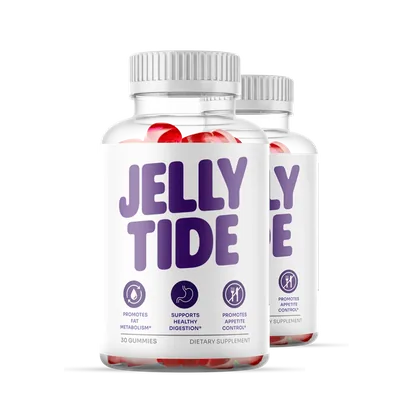
Fibre works, but powders that gel in seconds are fiddly and easy to abandon. JellyTide takes a simpler daily route: apple cider vinegar with BHB calcium, magnesium and sodium salts in a single gummy taken once a day — easy to keep up, no powder to mix.
See JellyTide on the Official StoreViscosity: the property that decides fullness
If you remember one word from this article, make it viscosity. Not all fibre is created equal for appetite: bran and cellulose are bulky but do not gel, so they help regularity far more than fullness. The fibres that curb appetite are the ones that thicken into a slow-moving gel, and the thicker that gel, the more it slows the stomach and the longer satisfaction lasts. On that single axis, glucomannan is the standout — its gel is dramatically more viscous than most, which is the entire reason it became an appetite ingredient in the first place.
Psyllium is viscous too, just not to the same extreme, and it makes up ground by being pleasant enough to actually keep taking. This is the point people miss when they obsess over which fibre is theoretically strongest: the best fibre for fullness is the one you will genuinely take before meals, day after day, with enough water. A slightly less viscous fibre used consistently beats a maximally viscous one you quit after a week because it was unpleasant. Adherence, not chemistry, usually decides the outcome.
Psyllium vs glucomannan compared
| Factor | Psyllium | Glucomannan |
|---|---|---|
| Source | Plantago ovata husk | Konjac root |
| Viscosity | High | Very high (top-tier) |
| Fullness / appetite | Good | Often stronger per gram |
| Blood sugar (post-meal) | Well documented | Same mechanism, less data |
| Cholesterol / regularity | Strong evidence | Modest |
| Typical dose | ~5–10 g/day | ~3–5 g/day before meals |
| Tolerability | Generally well tolerated | Can cause more gas early on |
The strongest fibre on paper is not the best fibre for you. The best fibre is the one you will take before meals, with water, for months — because adherence, not viscosity, is what actually moves appetite.
Blood sugar and cholesterol: where each fibre pulls ahead
Fullness is not the only reason people reach for these fibres. Both can gently flatten the post-meal glucose curve, because a slower-emptying stomach delivers sugars to the bloodstream more gradually. The effect is modest and only shows up when the fibre is taken with or shortly before a carbohydrate-containing meal, but it is a real, mechanism-backed bonus that pairs naturally with the appetite effect. If steadier glucose is a priority for you, it is worth reading alongside the wider evidence on ingredients like berberine and blood sugar control, which works by a completely different route.
On cholesterol, psyllium is the clear winner. Its LDL-lowering effect is well enough established that it is one of the few fibre claims regulators have been comfortable with, working by binding bile acids and prompting the body to pull cholesterol from the blood to make more. Psyllium also has its own pooled weight-loss analysis. Glucomannan has some cholesterol data too, but it is thinner and less consistent. So if your interest extends past appetite into heart-health markers, psyllium carries more weight; if it is squarely about pre-meal fullness, glucomannan's viscosity is the draw. Many people reasonably end up choosing on tolerability alone, and there is nothing wrong with that.

Dosing, timing and how to avoid the gas
The practical details make or break both fibres. For glucomannan, the studied range is roughly 3 to 5 grams a day, split into doses taken about 15 to 30 minutes before meals with a large glass of water. For psyllium, people commonly use somewhere around 5 to 10 grams a day, also with plenty of fluid. The universal rule for either is: start low and build up. Your gut bacteria need a week or two to adjust to a jump in fermentable fibre, and the way you skip most of the gas, bloating and cramping is simply to ramp the dose gradually rather than starting at the full amount on day one.
Timing matters because the mechanism is mechanical: the gel has to be present in the stomach when the food arrives, which is why before-the-meal is the instruction, not after. Water matters even more, and not only for comfort — it is a safety issue we will come back to. If you find powders unpleasant, capsules exist, but you often need to swallow several to reach a studied dose, which is its own kind of friction. Whatever form you choose, consistency beats intensity: a modest dose taken reliably before meals will out-perform an ambitious regimen you abandon.
Safety: the water rule you can't skip
Soluble fibre is about as gentle as supplements get, but there is one genuine hazard worth stating plainly. Because these fibres swell rapidly when they hit fluid, taking them — especially glucomannan, and especially in tablet form — without enough water can cause them to expand in the throat or oesophagus, which is a real choking and blockage risk. This is not a theoretical caution; it is the reason certain glucomannan products carried explicit warnings. The rule is simple and non-negotiable: always take viscous fibre with a full glass of water, never dry, and never right before lying down.
Beyond that, the cautions are mild. Both fibres can reduce or slow the absorption of some medicines and other supplements, so it is sensible to separate them by an hour or two from anything important, including the daily pill you cannot afford to blunt. Anyone with a history of bowel narrowing or swallowing difficulty should check with a doctor first. And as with any change, if you are pregnant, nursing or managing a health condition, a quick word with a healthcare professional is the right call before you start.
Which fibre should you pick?
Here is the decision, stripped down. Want the strongest possible pre-meal fullness per gram and you tolerate fibre well? Lean glucomannan. Want a well-rounded fibre with the biggest evidence base, bonus cholesterol and regularity benefits, and a gentler reputation? Lean psyllium. Not sure? Start with psyllium, because it is the more forgiving of the two, and only reach for glucomannan's extra viscosity if you find you want more appetite help. There is also no rule against using dietary sources of both — oats, legumes, chia and vegetables supply soluble fibre without any of the swallowing risk of concentrated powders.
What neither fibre is, is magic. The trials behind both show the same honest pattern that runs through this entire category: a modest, real effect that only appears on top of sensible eating and consistent use, never in place of them. If a product promises that a scoop of fibre will melt fat on its own, it has left the evidence behind. Held to that standard, though, viscous soluble fibre is one of the more legitimate appetite tools you can buy — cheap, mechanism-backed and genuinely useful when respected.
Where a transparent daily gummy fits alongside fibre
To be straight about our own product: JellyTide is not a fibre supplement, and this comparison has not pretended it is. It is an apple cider vinegar gummy built on a short, plainly listed formula — apple cider vinegar with BHB calcium, magnesium and sodium salts — aimed at easy, everyday support rather than the gel-in-a-glass routine that fibre demands. For plenty of people the two are complementary: soluble fibre before the meals that need it, and a simple daily gummy for the days a powder feels like too much friction.
The reason we can recommend fibre honestly and still stand behind our own product is that both are held to one standard: named ingredients, a stated blend total, and claims that stay inside the evidence. JellyTide is designed to meet exactly that bar — a modest, transparent everyday support, not a miracle, and not a twelve-herb list you have to decode.
Medical note: this article is general information, not medical advice. Viscous fibres can cause choking if taken without enough water and may slow the absorption of medicines. Speak to a healthcare professional before starting any supplement, especially if you have a swallowing or bowel condition, are pregnant, nursing, or taking medication.
Related reading
Frequently asked questions
Which is better for appetite, psyllium or glucomannan?
For raw fullness, glucomannan usually edges it: it is the more viscous of the two, forming a thicker gel that slows stomach emptying more per gram. Psyllium is not far behind and is often better tolerated. The best choice is the one you will take consistently with enough water, since neither fibre works if it sits in the cupboard.
Do both fibers help blood sugar?
Both soluble fibres can blunt the post-meal glucose spike by slowing how fast food leaves the stomach and how quickly sugars are absorbed. The effect is modest and depends on taking them with or just before carbohydrate-containing meals. Psyllium has the larger body of evidence here, but glucomannan works by the same viscous, gel-forming mechanism.
How much fiber should you take before meals?
Studies commonly use about 3 to 5 grams of glucomannan a day split before meals, or around 5 to 10 grams of psyllium daily. Start low, take it 15 to 30 minutes before eating with a full glass of water, and build up gradually to let your gut adjust and to avoid bloating.
Can fiber supplements cause bloating?
Yes, especially early on. Adding a lot of fermentable fibre quickly commonly causes gas, bloating and cramping while gut bacteria adjust. Easing in over a week or two, drinking enough water, and not exceeding the studied doses usually settles it. Taking any viscous fibre without enough fluid is also a genuine choking and blockage risk.
Scientific references
- Brum JM, Gibb RD, Peters JC, Mattes RD — Satiety effects of psyllium in healthy volunteers, Appetite (2016)
- Gibb RD, McRorie JW Jr, Russell DA, Hasselblad V — Psyllium fiber improves glycemic control proportional to loss of glycemic control: a meta-analysis, Am J Clin Nutr (2015)
- Gibb RD, Sloan KJ, McRorie JW Jr — Psyllium is a natural nonfermented gel-forming fiber that is effective for weight loss: comprehensive review and meta-analysis, J Am Assoc Nurse Pract (2023)
- Au-Yeung F, Jovanovski E, Jenkins AL, Zurbau A, et al. — The effects of gelled konjac glucomannan fibre on appetite and energy intake: randomised cross-over trial, Br J Nutr (2018)
- Harvard T.H. Chan School of Public Health — The Nutrition Source on fibre
One short label, every amount declared
Apple cider vinegar with BHB calcium, magnesium and sodium salts in a single daily gummy — a five-line panel, a stated 525 mg blend, nothing to mix.