Glucomannan and Weight Loss: What the Konjac-Fiber Appetite Evidence Shows
Quick Answer: Does Glucomannan Really Curb Appetite?
Glucomannan weight loss support is one of the better-evidenced appetite ideas. This soluble konjac fiber absorbs water and swells into a gel in the stomach, which increases fullness so you eat less. Trials found roughly five and a half pounds of extra loss over eight weeks. Take about three grams daily with plenty of water; expect some gas.
- How it works: a fiber that expands in the stomach and slows emptying.
- Realistic result: a modest edge, only alongside eating less.
- Non-negotiable: take it with a full glass of water before meals.

Of all the ingredients that show up in appetite-control products, glucomannan has one of the more respectable evidence files. It is not glamorous and it is not a metabolism trick. It is a fiber that gets thick and heavy in your stomach, and that simple physical fact is the whole mechanism. This review covers what the human trials on glucomannan weight loss found, how the satiety effect actually works, the dose and timing that matter, and the digestive side effects and safety points you need to respect before you swallow the first serving.
What glucomannan is and where it comes from
Glucomannan is a soluble dietary fiber extracted from the root of the konjac plant, Amorphophallus konjac, grown across East and Southeast Asia. The same fiber is what gives shirataki noodles their famously low calorie count. Chemically it is a long chain of sugar units that the human gut cannot digest, which is exactly the point: it passes through providing bulk and water-holding capacity rather than calories.
Its defining property is how much water it absorbs. Gram for gram, glucomannan holds more water and forms a thicker gel than most other soluble fibers. That high viscosity is why it turns up in appetite formulas rather than being sold purely as a digestive-health fiber. When people ask why konjac specifically, the answer is this water-thickening behaviour, not any exotic active compound.
The satiety mechanism: why a fiber makes you eat less
The way glucomannan curbs appetite is refreshingly mechanical, with no hand-waving required. When you take it with water before a meal, it absorbs that fluid and swells into a bulky gel that occupies real volume in your stomach. Three things follow. The gel physically fills the stomach, so you reach comfortable fullness on less food. It slows the rate at which the stomach empties into the intestine, so that fullness lasts longer. And by stretching the stomach wall and blunting the usual rise in hunger signalling, it tells your brain you have eaten enough sooner than you otherwise would.
This is why timing is everything. Glucomannan taken with a meal, or after it, has already missed its job. Taken fifteen to thirty minutes before eating, with enough water to fully hydrate the gel, it does the pre-loading that makes the next plate feel like plenty. The mechanism is the same reason a big glass of water and a salad before dinner takes the edge off hunger, only more pronounced and longer-lasting.
Want appetite support without a mystery blend?
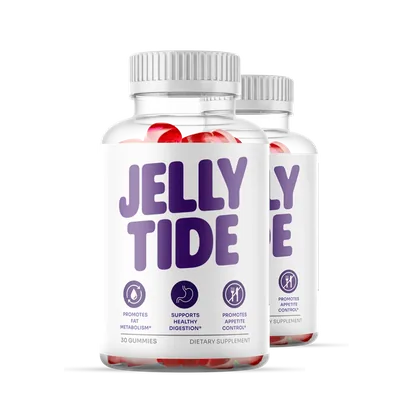
Plenty of "fat-burner" gummies bury glucomannan and a dozen extras inside a proprietary blend you can never verify. JellyTide keeps it shorter: apple cider vinegar with BHB calcium, magnesium and sodium salts, listed plainly on a five-line panel.
See JellyTide on the Official StoreWhat the human trials found on body weight
Glucomannan has been tested in a number of small, short randomised trials, and pooled reviews give a reasonably consistent signal. In a randomised trial of safety and efficacy in overweight and moderately obese adults and the reviews that followed, glucomannan taken before meals for around eight weeks tended to produce something in the region of five and a half pounds of extra weight loss compared with placebo. That is a genuinely useful number for a single fiber, and it is why the ingredient earns its place in this category rather than being dismissed outright.
The honest footnotes matter, though. The trials were mostly small and short, some found no benefit at all, and the effect is highly dependent on the fiber being paired with a controlled diet. Glucomannan does not create a calorie deficit by itself; it makes an existing effort to eat less feel easier to sustain. When it is dropped on top of an unchanged diet with no attention to portions, the results shrink. This is the same interpretive trap that affects most single-ingredient claims, and our guide on how to read a weight loss study walks through exactly which details separate a strong result from a flattering one.

How to dose glucomannan correctly
The dosing used in trials is easy to state: roughly one gram three times a day, each dose taken with a large glass of water about fifteen to thirty minutes before a main meal, for a daily total near three grams. A few practical rules make the difference between it working and it causing trouble. Always take it with plenty of fluid, never dry. Start at the lower end of the range for the first week so your digestive system can adapt. And keep it away from the moment you take any medication, because a viscous fiber can slow the absorption of pills taken at the same time; a gap of a couple of hours on either side is the usual advice.
Forms, doses and what each one is backed by
| Form | Typical amount | Human evidence | Practical notes |
|---|---|---|---|
| Powder mixed in water, pre-meal | ~1 g x3 daily | Best matches the trials | Must be fully hydrated in liquid |
| Capsules taken with a full glass | ~1 g x3 daily | Comparable, if dosed the same | Never swallow dry; use ample water |
| Shirataki / konjac noodles (food) | Variable per serving | Food-level, gentle | A whole-food way to get the fiber |
| Low-dose gummy "with konjac" | Often well under 1 g | May be sub-therapeutic | Check the actual gram amount |
| Glucomannan in a proprietary blend | Undisclosed | Cannot be evaluated | Amount hidden by design |
Glucomannan is one of the few appetite ingredients where the mechanism is visible to the naked eye: it swells in a glass of water. The catch is that it swells just as readily in your throat if you take it dry.
Objection one: "fiber is fiber, so any supplement will do"
Not quite. The satiety effect tracks closely with viscosity in cross-over feeding trials, and glucomannan is unusually viscous, which is why it tends to out-perform thinner or less water-holding fibers on appetite. A less viscous soluble fiber may be excellent for other reasons, such as cholesterol or bowel regularity, without doing much for fullness. If your goal is specifically to feel satisfied on smaller meals, the type of fiber matters. We compare two of the most common options head to head in our breakdown of psyllium versus glucomannan for fullness, which is worth a look before you pick one.
Objection two: "it has side effects, so it must be risky"
The common side effects of glucomannan are digestive and usually mild: bloating, gas, looser or firmer stools, most often in the first week while your gut adjusts or when you have not drunk enough water with it. These typically settle, and starting low and building up reduces them considerably. Framed honestly, a bit of gas is the sound of a fiber doing exactly what fiber does.
There is, however, one genuine hazard that is not mild and deserves plain language: taken dry or with too little liquid, glucomannan can swell before it reaches the stomach and cause choking or a blockage in the throat or gut. This is precisely why powders and capsules must be taken with a full glass of water, and why loose powder should never be swallowed on its own. People who have difficulty swallowing should avoid it altogether. Respected properly, the risk is easy to avoid; ignored, it is the one part of this ingredient that is not forgiving.
Objection three: "a fiber can't matter next to a real diet"
This objection is half right, and the half it gets wrong is the useful part. A fiber does not override calories, and glucomannan will not save an unstructured diet. But sustaining an energy deficit is mostly a battle against hunger, and anything that makes moderate portions feel adequate improves your odds of sticking with the plan for months rather than days. That is the realistic role: not a shortcut around eating less, but a tool that makes eating less feel less like a fight. A fiber-forward daily habit, built into meals rather than bolted on, is one of the more sustainable levers in the whole weight-management toolkit.

How glucomannan fits a realistic plan
Put together, the evidence supports glucomannan as a modest, mechanically sensible appetite aid. It has a plausible, visible mechanism, a decent cluster of short trials showing a small weight benefit, an easy-to-state dose, and one safety rule that must not be broken. It works best for people whose main struggle is portion size and between-meal hunger, taken before meals with plenty of water, as part of a diet they are actually trying to control. It does nothing for metabolism and offers no benefit if swallowed after you have already eaten.
Where it fits alongside other approaches is worth keeping in perspective. A network meta-analysis of 111 nutraceutical trials puts it near the top of a modest field. Appetite fibers, mild thermogenic ingredients and trace minerals all occupy the same "small helpful lever" tier. None of them is the engine. For the mineral side of that picture, our summary of chromium picolinate and body-weight research sets similarly honest expectations, and the same principle applies across the board: name the ingredient, state the amount, and keep the claims inside the data.
Where an apple cider vinegar gummy fits alongside this
The theme running through this whole article is that you should be able to see what you are taking. That is the standard we apply to every ingredient, and it is the standard behind the product we cover. JellyTide is built on apple cider vinegar with BHB calcium, magnesium and sodium salts, named on the panel as one 525 mg blend. It is not sold as a fiber supplement and it does not claim to swell in your stomach; it is a straightforward daily gummy with a short, stated panel — and we say plainly that its blend total is not split by ingredient, which is the transparency this piece has been asking of glucomannan products.
Medical note: this article is general information, not medical advice. Glucomannan must be taken with ample water to avoid choking or blockage, and it can slow the absorption of medicines taken at the same time. Speak to a healthcare professional before starting any supplement, especially if you are pregnant, nursing, taking medication, or have difficulty swallowing.
Frequently asked questions
Does glucomannan help with weight loss?
Modestly, and only as part of a controlled diet. In several trials, glucomannan taken before meals produced roughly five and a half pounds of extra weight loss over about eight weeks compared with placebo, though results varied and some studies found little effect. It works by making you feel full sooner, so you eat less, rather than by changing your metabolism.
How much glucomannan should you take?
Trials generally used about one gram three times a day, taken with a large glass of water fifteen to thirty minutes before each main meal, for a daily total near three grams. Taking it with plenty of fluid is essential, because the fiber needs water to expand and to pass safely. Start at the lower end to let your gut adjust.
What are glucomannan's side effects?
The common complaints are digestive: bloating, gas, loose stools or constipation, especially in the first week or if fluid intake is low. The one serious hazard is choking or throat and gut blockage if it is swallowed dry or without enough water, so it should always be taken with a full glass of liquid and never as a dry powder. People with swallowing difficulties should avoid it.
How does fiber suppress appetite?
Soluble fiber like glucomannan absorbs water and forms a thick gel in the stomach, which increases the volume of the meal, slows stomach emptying and stretches the stomach wall. That stretch and slower emptying signal fullness to the brain and blunt the rise in hunger hormones, so you tend to stop eating sooner and feel satisfied for longer between meals.
Related reading
Scientific references
- Keithley JK, Swanson B, Mikolaitis SL, DeMeo M — Safety and efficacy of glucomannan for weight loss in overweight and moderately obese adults, J Obes (2013)
- Au-Yeung F, Jovanovski E, Jenkins AL, Zurbau A, et al. — The effects of gelled konjac glucomannan fibre on appetite and energy intake in healthy individuals: randomised cross-over trial, Br J Nutr (2018)
- Zalewski BM, Szajewska H — No effect of glucomannan on body weight reduction in children and adolescents with overweight and obesity: a randomized controlled trial, J Pediatr (2019)
- Shahinfar H, Jayedi A, Torabynasab K, et al. — Comparative effects of nutraceuticals on body weight: network meta-analysis of 111 randomized clinical trials, Pharmacol Res (2023)
- Harvard T.H. Chan School of Public Health — The Nutrition Source on fiber
One short label, every amount declared
Apple cider vinegar with BHB calcium, magnesium and sodium salts in a single daily gummy — a five-line panel and a stated 525 mg blend total.