How to Read a Weight Loss Study Critically (Without a Statistics Degree)
Quick Answer: How Do You Read a Weight Loss Study Critically?
Judge four things before you believe a headline: how many people took part, how long the trial ran, who paid for it, and how big the effect actually was. A large, long, placebo-controlled, independently funded study reporting a clinically meaningful loss is strong. A small, short, industry-funded trial with no placebo is weak, however impressive the percentage sounds.
- Size and length: dozens of people for a few weeks is preliminary, not proof.
- Placebo and funding: no control group or hidden sponsor means read the methods harder.
- Effect size: statistically significant and clinically meaningful are not the same thing.
Every supplement in the weight-loss aisle claims to be backed by science, and in a narrow sense many of them are. There is usually a study. The problem is that "there is a study" and "this works" are separated by a wide gap that the marketing is designed to hide. Learning how to read a weight loss study is the single most useful skill a supplement shopper can have, because it lets you stand in front of a bold claim and ask the questions the label hopes you will skip. You do not need a statistics degree to do it. You need four questions, asked in order, and the willingness to walk away when the answers are thin.
This guide gives you those four questions and shows you how to answer them from the information a study actually provides. By the end you will be able to look at a citation on a product page and tell, in a couple of minutes, whether it is real evidence or decoration. That skill protects your money and your expectations at the same time, which is why we teach it before we ever mention a product.
How to read a weight loss study: the four questions that matter
Most of what separates strong evidence from weak evidence comes down to four features of the trial. Take them one at a time. If a claim cannot survive all four, it is not that the ingredient definitely does nothing — it is that this particular study has not earned your belief yet.
1. How many people took part?
Sample size is the first filter because small trials are the most misleading. When only a few dozen people are studied, a couple of unusually good responders, or a couple of dropouts, can swing the average enough to manufacture a headline that would vanish in a larger group. This is not a subtle statistical point; it is the reason so many exciting pilot results never replicate. A weight-loss trial with fewer than roughly fifty people per group should be read as a first look, a reason to run a bigger study, not as a conclusion.
The strongest answers rarely come from any single trial at all. They come from a systematic review or meta-analysis that pools several independent studies and reports whether the effect holds up once the small, flattering ones are set beside the larger, soberer ones — the way a network meta-analysis of 111 nutraceutical trials does for this whole aisle. When a product page cites one small trial and no review, that absence is itself information.
2. How long did it run?
Duration is the second filter, and for weight it is decisive. Almost anything can produce a short-term dip on the scale — water shifts, an initial burst of motivation, a change in what people eat while they are being watched. Weight regain is the norm, not the exception, so a four-week or six-week study tells you very little about whether an effect lasts. Reputable weight-management trials generally run for at least twelve weeks, and the questions that actually matter to a person's health are answered over months and years, not days.
When you see a dramatic number, check the timeline first. A large loss over six weeks and a modest loss sustained over six months are not the same finding dressed differently; the second is worth far more, and it is the harder one to achieve, which is exactly why the short trials are the ones you see quoted.
3. Was there a placebo, and was it randomised?
The third filter is the control group. The placebo effect in weight loss is large, because the act of joining a trial changes behaviour: people who sign up to test a fat-loss product tend to eat more carefully and move more, whether they got the pill or the sugar capsule. Without a placebo group experiencing the same attention, you cannot tell how much of the result belongs to the ingredient and how much belongs to the enrolment. Randomisation — assigning people to groups by chance — and blinding, where neither participant nor researcher knows who got what, are what keep hope and expectation from leaking into the numbers.
The CONSORT 2025 reporting guideline exists precisely so these details are stated rather than implied. A "study" that gave everyone the product and measured them before and after is not evidence of an ingredient effect. It is a description of what happened to a group of motivated people over a few weeks, and the ingredient is the least supported explanation for it.
Prefer a product that states exactly what is in it?
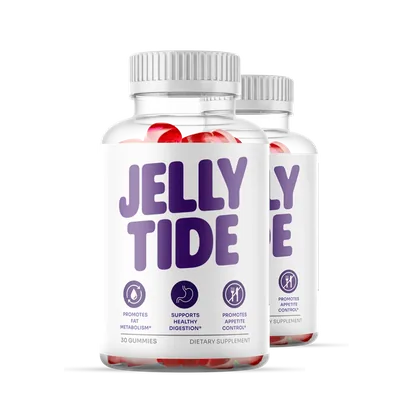
Once you can read a study, you start wanting labels that tell the truth: a named dose of a named ingredient, not a "proprietary blend" you cannot evaluate. JellyTide is apple cider vinegar with BHB calcium, magnesium and sodium salts — a modest support to a calorie-aware diet, with every ingredient named on the panel.
See JellyTide on the Official Store4. Who paid for it, and how big was the effect?
The last two questions travel together. Funding matters because, on average, industry-sponsored nutrition studies report favourable results more often than independent ones, and the gap between promotion and evidence is at its widest in the garcinia cambogia literature. That does not make a company-funded study wrong — a great deal of legitimate research is sponsored — but it raises the bar for scrutiny. Check who designed the trial, who ran the analysis, and whether an independent group has replicated the finding. A conflict of interest is a reason to read the methods twice, not an automatic disqualification.
Effect size is where most people are led astray, because "statistically significant" sounds like "big" and means nothing of the kind. Statistical significance only tells you an effect is unlikely to be pure chance; it says nothing about whether the effect is large enough to matter. A well-powered trial can find a statistically significant average loss of half a kilogram that is completely real and completely useless to your health. The number that matters clinically is around a sustained five percent of body weight, the point at which markers like blood pressure and blood sugar begin to move. Always ask not "is there an effect?" but "is the effect big enough to change anything?"

Three myths that let weak studies look strong
Even readers who know the four questions get caught by a handful of persistent myths. Naming them makes them easy to spot on a product page.
Myth 1: "Clinically proven" means the finished product was tested
Almost never. In the overwhelming majority of cases, the research was done on a single ingredient, often at a dose higher than the product contains, and sometimes in a form the product does not use. The finished multi-ingredient supplement — the actual thing in the bottle — is rarely tested as a whole. Independent laboratory work has also found that the amounts printed on weight-loss supplement labels often do not match what is in the bottle. So "clinically proven ingredients" can be strictly true while telling you nothing about whether this formula, at this dose, does anything. When you read a claim, trace it back to what was actually studied, and check whether the studied dose matches the amount on the label. A famous mismatch is the two small forskolin trials that launched an entire product category on 50 mg a day of a standardised extract; we walk through exactly that gap in our piece on whether any weight loss supplements actually work, using the forskolin studies as the test case.
Myth 2: A mechanism is the same as a result
"Boosts metabolism," "activates fat-burning enzymes," "blunts glucose spikes" — these describe a plausible pathway in a cell or a test tube. A mechanism is a reason to run a human trial, not a substitute for one. The body is full of feedback loops that quietly cancel out changes that look decisive in a dish. When a claim leans hard on mechanism and light on outcomes in real people, that weighting is the tell. Ask what happened to the weight of actual humans over actual months, not what happened to an enzyme.
Myth 3: Correlation is causation
Observational studies that follow large groups are valuable for generating questions, but they cannot prove that an ingredient caused a result, because the people who take it differ from those who do not in a hundred other ways. People who use a particular supplement may also be more health-conscious, wealthier, or younger, and any of those could explain a difference the headline pins on the pill. When you see "people who took X weighed less," the correct reading is "here is a question worth testing," not "X causes weight loss." Only a randomised trial can promote a correlation into a cause.
The most useful question in front of any weight-loss claim is not "is there a study?" It is "how big, how long, who paid, and did anyone find it twice?"
A worked example: reading a claim in two minutes
Picture a product page that says: "In a clinical study, participants lost 3x more weight." Run the four questions. How many people? The page does not say — strike one. How long? Not stated — strike two. Placebo-controlled and randomised? "3x more" implies a comparison, but against what, and were the groups randomised? Unstated — strike three. And the effect size trap is buried in the phrasing: "3x more weight" could mean the difference between losing 0.3 kg and 0.9 kg, a tripling that is statistically real and clinically irrelevant. A claim that cannot answer a single one of the four questions is not evidence you can act on. It is a sentence engineered to feel like evidence.
Now the reassuring part: you did not need to understand a p-value or a confidence interval to take that claim apart. You needed four questions and the discipline to insist on answers. That is genuinely most of critical appraisal for a shopper. The professional version adds nuance, but the core move — refuse to be impressed until size, length, control, funding and effect are on the table — is available to anyone.

What honest evidence actually looks like
Apply this lens across the whole category and a pattern emerges that the aisle would rather you did not notice: the honest effects are small. The ingredients with the steadiest human evidence — fibre and protein for fullness, caffeine for a short-lived and tolerance-prone bump in energy expenditure, apple cider vinegar for a modest blunting of the post-meal glucose rise — produce nudges, not transformations, and only alongside a calorie-aware diet. That is not a disappointment; it is what real physiology looks like once you strip the marketing away. A claim that promises more than a nudge is usually a claim that has failed at least one of the four questions.
This is exactly why we build on a modest, reproducible ingredient rather than a dramatic mechanism. Vinegar's effect on post-meal glucose and insulin has been shown repeatedly in small human trials, and the weight data, where they exist, describe a kilogram or two over roughly twelve weeks with an ordinary diet — the kind of finding that survives being checked. We lay out that literature honestly, weak spots included, in our review of the apple cider vinegar weight-loss evidence. JellyTide is built on that ingredient because a small claim that holds up is worth more than a big one that does not.
Medical note: this article is general information about reading research, not medical advice. Study appraisal is a skill, not a diagnosis. Speak to a qualified healthcare professional before starting any supplement or making changes to your diet, especially if you are pregnant, nursing, or taking medication.
A pocket checklist you can reuse
Keep these questions somewhere you can reach them the next time a product page waves a study at you. Written out plainly, they are all you need to separate evidence from decoration.
| What to check | Weak signal | Strong signal |
|---|---|---|
| Sample size | A few dozen people, one trial | Large trial, or several pooled in a review |
| Duration | 4–6 weeks | 12 weeks or more, ideally with follow-up |
| Control group | No placebo; before-and-after only | Randomised, placebo-controlled, blinded |
| Funding | Sponsor undisclosed or ran the analysis | Independent, or declared and replicated |
| Effect size | "Significant" with no numbers | Around 5% body weight, sustained |
| What was tested | An ingredient, not the product | The finished product, at the label dose |
Frequently asked questions
How do I know if a supplement study is reliable?
Check four things fast: is it randomised against a placebo, how many people took part, how long it ran, and who paid for it. A reliable study is a randomised controlled trial with a placebo group, enough participants to detect a real difference, a duration of at least twelve weeks, and independent or clearly declared funding. A single small industry-funded trial with no placebo is the weakest form of evidence, no matter how confident the headline sounds.
What sample size makes a study trustworthy?
There is no single magic number, because the sample needed depends on how large the real effect is, but for a weight-loss supplement a trial of a few dozen people is preliminary at best. Studies of fewer than roughly fifty per group are easily thrown off by chance and by a handful of dropouts. More trustworthy answers come from larger trials, and above all from several independent trials pooled in a systematic review or meta-analysis rather than from any single study.
Does industry funding bias results?
On average, yes. Industry-funded nutrition and supplement studies are more likely to report positive results than independently funded ones, an effect documented across many research areas. Funding alone does not make a study wrong, and plenty of good research is company-sponsored, but it is a reason to read the methods harder, to check who designed and analysed the trial, and to look for independent replication before believing the conclusion.
What is a clinically meaningful weight change?
Regulators and clinicians usually treat a loss of around five percent of body weight, sustained over time, as the point where health markers such as blood pressure, blood sugar and blood lipids start to improve. A trial can report a statistically significant loss of half a kilogram that is real yet too small to matter to your health. Always separate whether an effect exists from whether it is large enough to be worth anything.
Scientific references
- Hopewell S, Chan AW, Collins GS, Hróbjartsson A, et al. — CONSORT 2025 statement: updated guideline for reporting randomised trials, BMJ (2025)
- van Ravenzwaaij D, Ioannidis JPA — True and false positive rates for different criteria of evaluating statistical evidence from clinical trials, BMC Med Res Methodol (2019)
- Crawford C, Avula B, Lindsey AT, et al. — Label accuracy of weight loss dietary supplements marketed online, JAMA Network Open (2024)
- Shahinfar H, Jayedi A, Torabynasab K, et al. — Comparative effects of nutraceuticals on body weight: network meta-analysis of 111 randomized clinical trials, Pharmacol Res (2023)
- Cochrane — what systematic reviews are and why they sit above single trials
A small claim, clearly stated
Now that you can appraise a study, judge us by our own standard: apple cider vinegar with BHB calcium, magnesium and sodium salts in one daily gummy — modest support for appetite and everyday metabolism, with every ingredient named on the panel and the blend total stated.