Green Tea Extract for Weight Loss: What the EGCG and Caffeine Evidence Really Shows
Quick Answer: Does Green Tea Extract Actually Burn Fat?
Green tea extract weight loss effects are real but small. EGCG plus caffeine modestly raises fat oxidation and daily energy burn, averaging roughly one to three pounds over twelve weeks in trials, and the benefit fades without caffeine. High-dose extracts carry rare liver-injury reports, so food-level intake taken with meals is the safest route.
- What works: a small thermogenic nudge, only alongside diet.
- What to watch: concentrated extracts and empty-stomach dosing.
- Safest dose: the EGCG you would get from a few cups of brewed tea.
Almost every fat-burner on the shelf lists green tea somewhere on the panel, and the reason is not marketing alone. Green tea is one of the few plant ingredients with a genuine, repeatable metabolic signal in humans. The problem is that the signal is quiet, and the way it gets sold is loud. This article walks through what the human data on green tea extract for weight loss actually found, how large the effect is once you strip out the hype, what dose the studies used, and where the real safety line sits. No cures, no miracles, just the numbers.
Where the green tea extract weight loss idea comes from
Green tea contains a family of polyphenols called catechins, and the most studied of them is epigallocatechin gallate, mercifully shortened to EGCG. Alongside those catechins, green tea naturally carries caffeine. Researchers noticed decades ago that this pairing appeared to raise metabolic rate slightly and shift the body toward burning a little more fat for fuel, a process broadly labelled thermogenesis. That laboratory observation is the seed of the entire category.
The mechanism people cite is that EGCG slows an enzyme which breaks down norepinephrine, the signalling molecule that tells fat cells to release their stored contents. If norepinephrine hangs around a fraction longer, the theory goes, fat oxidation ticks up. Caffeine works on a related pathway, which is why the two together do more than either alone. It is a tidy story, and unlike many supplement mechanisms it does have human measurements behind it. What matters is reading those measurements honestly rather than rounding them up.
What the human trials found on fat oxidation and thermogenesis
Controlled metabolic-chamber work has repeatedly shown that a dose of green tea catechins with caffeine raises 24-hour energy expenditure by a modest amount, on the order of 3 to 4 percent in the studies that measured it carefully, and increases the share of that energy coming from fat. For an average adult, a few percent of daily burn is a few dozen calories, not hundreds. It is a real number and a small one at the same time.
When you step up from a single metabolic-chamber day to actual weight-loss trials lasting weeks or months, the pooled picture is a small average loss. Meta-analyses of green tea preparations tend to land around one to three pounds of extra weight loss versus placebo over roughly twelve weeks, with wide variation between studies and a fair amount of statistical noise. That is the honest headline: measurable, consistent in direction, and modest in size. Anyone promising that green tea extract will melt away twenty pounds is not describing this literature.
Prefer ingredients you can actually check?
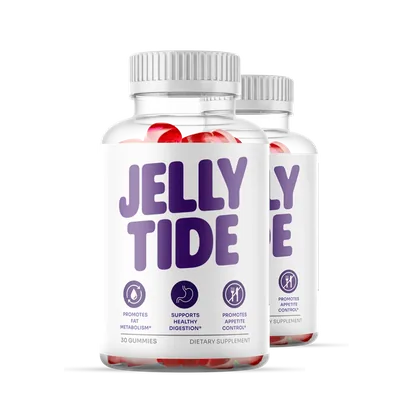
Most fat-burners hide green tea and a dozen other botanicals inside a proprietary blend, so you can never match the label to a study. JellyTide takes a shorter approach: apple cider vinegar with BHB calcium, magnesium and sodium salts, named on a five-line panel with the blend total stated.
See JellyTide on the Official StoreThe caffeine catch nobody mentions
Here is the detail that reframes most green tea marketing: strip out the caffeine and the fat-burning effect largely collapses. Pooled studies of EGCG on its own find far smaller changes in energy expenditure than the caffeinated combination. The thermogenic action people attribute to EGCG is, in large part, EGCG amplifying caffeine. That is not a scandal, but it is a fact that quietly undermines the premium pricing of "clinical" catechin extracts.
It also means your existing caffeine habit changes the maths. People who already drink several coffees a day have a caffeine-adapted metabolism, and in that group the added push from a green tea supplement is smaller still. If you want to understand why the same pill seems to do something for one person and nothing for another, caffeine tolerance is usually the hidden variable. We cover that mechanism in more depth in our look at what the research says about caffeine and fat burning, and it is worth reading before you spend money on a catechin blend.
How much EGCG the studies actually used
Dose is where a lot of supplements quietly fail. The trials that reported any measurable effect on energy expenditure generally delivered somewhere in the region of 250 to 500 mg of EGCG per day, usually paired with a meaningful amount of caffeine, and often split across two or three servings taken with food. That is a specific, checkable range. Plenty of products list a large-sounding "green tea extract 500 mg" figure without ever telling you the EGCG percentage, which means you cannot work out whether you are getting a studied amount or a sprinkle.
The table below sorts the common forms by how closely they map onto the human evidence. The pattern is the same one that shows up across this whole aisle: the further you get from a stated, standardised amount, the less the number on the front of the bottle actually means.
Forms, doses and what each one is backed by
| Form | Typical EGCG | Human evidence | Comparable to studies? |
|---|---|---|---|
| Brewed green tea (2–3 cups) | ~150–300 mg | Consistent, gentle | Yes — and safest |
| Extract standardised to EGCG % | 250–500 mg stated | Small weight-loss trials | Yes, if the % is printed |
| Decaffeinated catechin extract | Varies | Little to no effect | No — caffeine removed |
| "Green tea 500 mg", no % listed | Unknown | Cannot be evaluated | No — EGCG undisclosed |
| Green tea inside a proprietary blend | Undisclosed | None | No — amount hidden by design |
An ingredient with a real but small effect is easy to oversell. The honest sentence is "a modest thermogenic nudge that helps a good diet along" — not "burns fat while you sleep".
Objection one: "but studies show it works, so more must be better"
This is the most expensive myth in the category, because it points people straight at high-dose extracts. The dose-response for green tea does not keep climbing; the metabolic effect plateaus, and past a certain point you are adding risk without adding benefit. The studies that found something used moderate amounts. Doubling or tripling the EGCG does not double or triple the fat loss. It mostly increases the odds of the one genuinely serious concern with this ingredient, which we come to next.
Objection two: "green tea is natural, so it can't hurt your liver"
Drinking green tea has an excellent safety record. Concentrated green tea extract is a different material, and the distinction matters: it appears in registry data on liver injury from herbal and dietary supplements. Regulatory bodies and published case reviews have documented rare instances of liver injury linked to high-dose green tea extract supplements, disproportionately when taken on an empty stomach and at large doses. The absolute risk to any one person is low, but it is not zero, and it is precisely the "more is better" behaviour above that pushes it up.
Those safeguards generalise, and we set them out for this whole category in what side effects an ACV gummy can actually cause. The practical safeguards here are simple and effective: keep to doses in the region of what brewed tea provides, take any extract with a meal rather than fasted, avoid stacking several catechin products at once, and stop and seek medical advice promptly if you notice dark urine, yellowing of the skin or eyes, or unusual fatigue. None of this is a reason to fear a cup of green tea. It is a reason to treat a concentrated extract as the drug-strength preparation it effectively is. For a broader framework on judging where a supplement claim tips from supported to overstated, our guide on how to read a weight loss study lays out the questions to ask.
Objection three: "it targets belly fat"
No supplement, food or exercise removes fat from a chosen spot. Spot reduction is not how human fat metabolism works. Green tea extract raises whole-body fat oxidation a little, and where any resulting fat loss shows up is dictated by your genetics and your overall calorie balance, not by the ingredient. Products that show a slim waist next to a green tea pill are selling a picture, not a mechanism. The same honest framing applies to fibre-based appetite ingredients, which we cover in our review of glucomannan fiber and the appetite evidence, and to trace minerals in our chromium picolinate weight research summary.

How green tea extract fits a realistic plan
Put together, the evidence supports a narrow, honest role. Green tea extract is a minor lever. It can slightly raise the number of calories you burn and slightly favour fat as fuel, and over a few months that can translate into a pound or two beyond what diet alone delivers. It is caffeine-dependent, so it works best for people who are not already saturated with coffee. And it should be dosed conservatively, with food, because the concentrated form carries a small but real liver caution that brewed tea does not.
What it cannot do is replace the two things that actually move body weight: an energy deficit you can sustain, and enough protein and fibre to keep hunger manageable while you hold that deficit. Any ingredient, green tea included, is a rounding error next to those. The most useful way to think about a fat-burner ingredient is as a small accelerator on a car you still have to drive.
Where an apple cider vinegar gummy fits alongside this
If you have been comparing metabolism-support options, the filter is not "which ingredient sounds strongest" but "which product tells me exactly what I am taking". That is the whole reason we keep coming back to named, measured formulas. JellyTide is built on apple cider vinegar with BHB calcium, magnesium and sodium salts, named on the panel as one 525 mg blend. It is not positioned as a green tea product and it does not pretend to be a fat-melting miracle. It is a straightforward daily gummy with a five-line panel, which is exactly the standard this article has been holding green tea extract to.
Medical note: this article is general information, not medical advice. High-dose green tea extract has been linked in rare cases to liver injury and caffeine can interact with medicines and heart conditions. Speak to a healthcare professional before starting any supplement, especially if you are pregnant, nursing, or taking medication.
Frequently asked questions
Does green tea extract help you lose weight?
It can nudge the numbers, not transform them. Pooled trials show green tea catechins with caffeine produce an average loss of roughly one to three pounds over about twelve weeks, and the effect largely disappears when caffeine is removed or when people already drink a lot of coffee. It is a small metabolic tailwind that only shows up alongside a sensible diet, never a substitute for one.
How much EGCG is effective?
The trials that measured any effect on energy expenditure generally used somewhere between 250 and 500 mg of EGCG a day, usually paired with 80 to 300 mg of caffeine, split across meals. Higher is not better and raises the safety concern. Getting a similar amount from two or three cups of brewed green tea is the gentlest way to reach that range.
Is green tea extract safe for your liver?
Drinking green tea is not linked to liver harm, but concentrated extracts are a different story. Regulators and case reviews have recorded rare instances of liver injury with high-dose green tea extract supplements, more often when taken on an empty stomach. The practical safeguards are to stay near food-level doses, take it with a meal, and stop and seek advice if you notice dark urine, yellowing or unusual fatigue.
Does green tea burn belly fat?
There is no ingredient that removes fat from one chosen area, and green tea is no exception. What the data shows is a small increase in whole-body fat oxidation and daily energy expenditure, which over time can slightly favour fat loss overall. Where that fat comes off is set by your genetics and your overall deficit, not by the supplement.
Related reading
Scientific references
- Hursel R, Viechtbauer W, Westerterp-Plantenga MS — The effects of green tea on weight loss and weight maintenance: a meta-analysis, Int J Obes (Lond) (2009)
- Kapoor MP, Sugita M, Fukuzawa Y, Okubo T — Physiological effects of epigallocatechin-3-gallate on energy expenditure for prospective fat oxidation in humans: systematic review and meta-analysis, J Nutr Biochem (2017)
- Dulloo AG, Duret C, Rohrer D, Girardier L — Efficacy of a green tea extract rich in catechin polyphenols and caffeine in increasing 24-h energy expenditure and fat oxidation in humans, Am J Clin Nutr (1999)
- Navarro VJ, Khan I, Björnsson E, Seeff LB — Liver injury from herbal and dietary supplements, Hepatology (2017)
- LiverTox (NIH) — green tea extract and hepatotoxicity
One short label, every amount declared
Apple cider vinegar with BHB calcium, magnesium and sodium salts in a single daily gummy — a five-line panel and a stated 525 mg blend total.